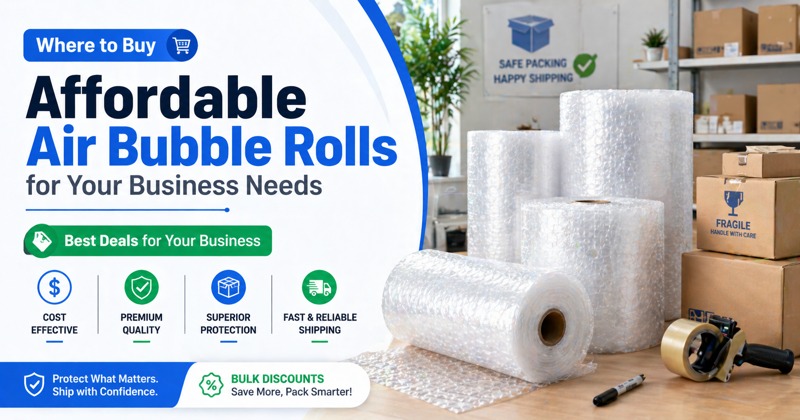
The rapid growth of e-commerce and the high-tech manufacturing sector in South India has turned protective secondary materials into a significant recurring line item on every logistics budget. For a business shipping fragile electronics or glassware, the cost of the packaging is secondary to the cost of the damage. However, many procurement managers still treat air bubble packaging as a generic commodity, prioritizing the lowest per-roll price without auditing the actual performance of the plastic. This approach usually backfires. When a product arrives shattered because the air inside the bubbles leaked out during a two-day truck journey, the savings on the packaging material vanish instantly. Finding a balance between cost and integrity requires moving past the glossy catalogs of trading companies and understanding the physical reality of the factory floor.
The primary issue in the current market is the lack of transparency regarding material thickness and roll length. Most small-scale sellers in the Chennai industrial belts will quote a standard price for a 100-meter roll, but very few actually deliver 100 meters of usable material.
The Hidden Mechanics of Air Retention
A bubble is only useful if it stays inflated under pressure. The quality of air bubble packaging depends entirely on the resin blend and the micron count of the film. Most budget-grade rolls are made from low-density polyethylene (LDPE) that is too thin to hold air for more than a few hours. If the plastic is porous, the air slowly diffuses out. By the time your package reaches the customer in another state, the bubbles are flat, and the product is rattling against the box walls.
- Micron Thickness: For light items like clothing or plastic toys, a 35 or 40-micron film is sufficient. For heavy industrial components or glass, you need at least 50 to 70 microns. Anything less will burst the moment the boxes are stacked.
- The Squeeze Test: You can identify poor-quality material by squeezing a single bubble. If it pops with minimal pressure or feels “crunchy” like dry paper, the plastic is likely made from a high percentage of low-grade recycled scrap. High-quality film feels elastic and resists popping.
- Single vs. Double Layer: Most businesses use single-layer bubble wrap where the bubbles are exposed on one side. For high-value exports, double-layer wrap—where the bubbles are sandwiched between two flat sheets of plastic—provides much better puncture resistance and stacking strength.
Investing in a slightly higher micron count often allows you to use fewer layers of wrap. This paradoxically lowers your total cost per package even if the per-roll price is higher.
The “Short Length” Scam in Local Markets
The most common trap for businesses in Chennai is the “short roll.” When you buy a bubble sheet roll from a neighborhood trader, you are often paying for 100 meters but receiving only 70 or 80. Because it is physically difficult to unroll and measure a massive bundle of plastic in a warehouse, many traders take advantage of this logistical hurdle. They wind the plastic loosely around the core to make the roll look thick, even though the actual linear length is significantly shorter than advertised.
This is why working directly with established Air Bubble Roll Manufacturers is a strategic necessity. A manufacturer with a reputation to protect will provide a weight-based guarantee or a verified meterage. If you are buying in bulk, always ask for the weight of the roll. Plastic is sold by weight at the raw material level, so the weight of the finished roll is the only honest metric that cannot be faked. If two suppliers quote the same length but one roll weighs two kilograms less, you know exactly where the “savings” are coming from.
Choosing the Right Bubble Diameter for Your Product
Not all bubbles are created equal. The size of the air pocket determines the type of protection. Using the wrong size is a waste of money and storage space.
- Small Bubbles (10mm): These are best for surface protection and preventing scratches. They are ideal for smartphones, tablets, and polished metal parts. They don’t provide much “crush” protection, but they keep the finish of the product pristine.
- Medium Bubbles (20mm): This is the versatile standard for most e-commerce needs. It provides a decent balance of cushioning and void-fill.
- Large Bubbles (30mm and above): These are specifically designed for heavy-duty void filling. If you have a large box with a small, heavy item inside, large bubbles prevent the item from shifting. They are much more efficient at filling space than multiple layers of small bubbles.
Procurement teams that fail to differentiate between these sizes often end up over-ordering. They try to use small-bubble wrap to fill large gaps, which consumes the roll twice as fast as using the correct large-bubble variant.
Manufacturer vs. Trader Dynamics in Chennai
The Chennai market is saturated with intermediaries operating out of godowns in Parrys or Ambattur. These traders offer small-scale convenience, but you are usually paying a 30% premium for their warehouse space and retail margins. The real danger is the lack of a technical paper trail. A trader cannot explain a failure in the resin blend or a drop in the micron count. They simply pass the defective stock to the next buyer. Transitioning to specialized producers provides direct accountability. Large manufacturers use automated extrusion lines that ensure the bubble height remains consistent across the entire length of the roll.
- Antistatic shielding: This is a non-negotiable requirement for circuit boards and sensitive PC hardware. Standard plastic creates friction that generates static electricity, leading to silent component failure. Antistatic wrap dissipates these charges, which is a requirement for high-tech logistics.
- Labor-saving pouches: If your team is manually cutting a bubble sheet roll for thousands of units, you are losing money on labor. Manufacturers can supply pre-cut pouches. You slide the item in and seal it. This turns a slow manual process into a rapid assembly line.
- UV additives: Standard polyethylene becomes brittle and turns to dust when exposed to the intense sun in local warehouses. UV-stabilized rolls are necessary for inventory stored near open bays or for long-distance transit in open trucks.
Sustainability and the Myth of Non-Recyclability
The environmental impact of plastic is a growing concern for international buyers. Many European and American clients now mandate that their Indian suppliers use a percentage of recycled content or biodegradable additives. The problem is that many local suppliers lie about these credentials.
Genuine eco-friendly air bubble packaging is made from 100% recyclable LDPE. The challenge isn’t the material; it’s the collection. Professional manufacturers are now moving toward “Circular Economy” models where they take back the scrap and waste from their clients to re-process it. If your brand is marketing itself as sustainable, you must audit your supplier’s recycling certifications. Using a “green-looking” roll that isn’t actually repulpable is a liability in the era of strict ESG (Environmental, Social, and Governance) audits.
Cost Realities: The ROI of Protection
When a customer receives a broken item, you lose more than just the product cost. You lose the shipping fee, the labor cost of processing the return, and most importantly, the customer’s trust. A bad review on a marketplace can cost you thousands in future sales. In this context, spending an extra fifty paise per unit on a higher-micron air bubble packaging is the most effective insurance policy you can buy.
Procurement should not be a race to the bottom. It should be an engineering decision. If you are shipping automotive parts out of Chennai to a global market, your secondary packaging is the only thing standing between your reputation and a massive insurance claim.
Final Procurement Steps
Before signing a long-term contract, always perform a sample test. Wrap your most fragile product, put it in a box, and drop it from a height of four feet. If the bubbles burst or the product moves, the material is insufficient. Don’t let a salesman talk you out of your own data.
The best results come from long-term partnerships with established packaging industries in Chennai who understand the humidity and transit rigors of the Indian landscape. Whether you need a standard bubble sheet roll or a specialized antistatic pouch, the goal is consistent, predictable protection. Moving your procurement away from the unorganized sector and toward technical specialists ensures that your logistics chain remains unbroken. High-quality packaging isn’t an expense; it is a fundamental part of the product’s value.