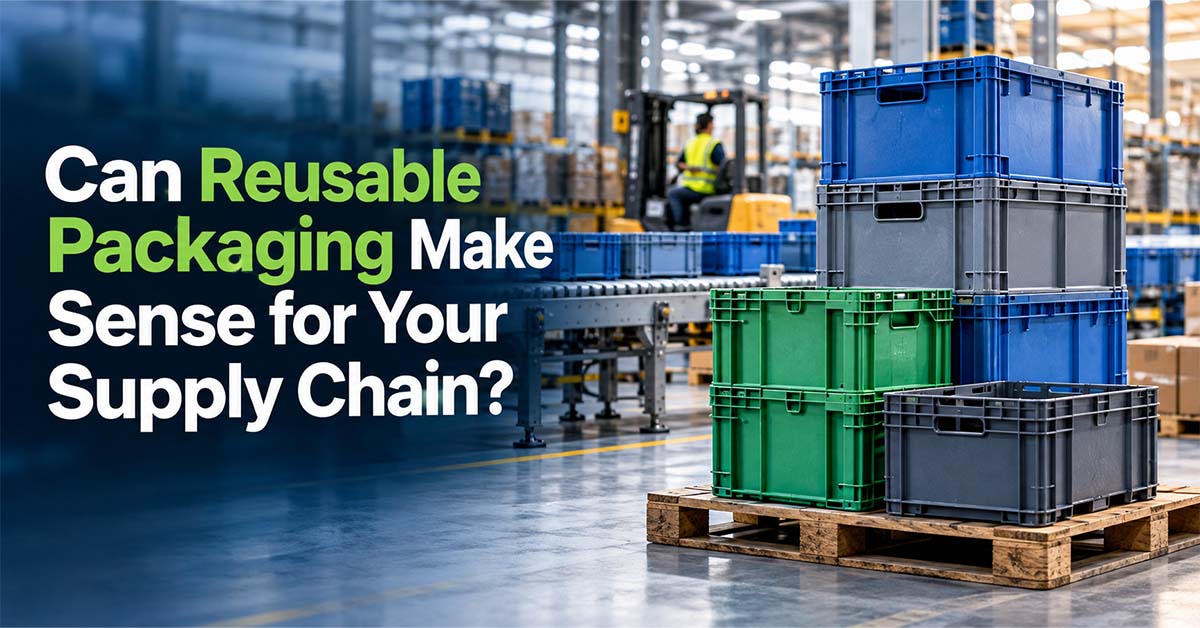
Every evening, a dispatch supervisor counts the crates that left the dock and the crates that came back. The numbers rarely match, and nobody can say where the missing ones went. That small mismatch is the heart of the reusable packaging debate: the idea saves money on paper, but only works when containers actually return.
This article looks at what reusable packaging is, where it works best, how the costs compare, what happens to return logistics, the hurdles that trip up first-time adopters and how to test the idea with a small pilot. If you are speaking with packaging companies in Chennai about your next order, it should help you ask sharper questions.
What Reusable Packaging Actually Covers
The term stretches well beyond a plastic crate. It covers any container, pallet or protective item designed to make many trips instead of one.
- Plastic and metal crates, bins and totes
- Returnable pallets, in plastic, wood or composite
- Heavy-duty collapsible containers that fold flat on the return leg
- Durable dividers and inserts that protect parts inside a crate
- Reusable pouches, bags and wraps for closed-loop deliveries
- Sturdy, repairable corrugated boxes designed for several cycles
What these share is a longer life and a plan for getting them back. Without the second part, a reusable item is just an expensive single-use one.
Where Reusable Packaging Works Best
Some supply chains suit reuse naturally, and others fight it. The deciding factor is usually whether the packaging can return reliably.
- Closed loops: Movements between your own plants, warehouses and stores, or between you and a handful of regular partners
- Predictable routes: Fixed schedules with the same destinations, so empties can be collected on the way back
- High-value or fragile goods: Auto parts, electronics and glassware benefit from rigid, fitted packaging that reduces damage
- High-volume repeat shipments: Where the same item moves daily, so the investment spreads across many trips
Open, one-way flows, such as shipping single parcels to individual customers, are harder. The return trip costs money, and few customers will send a box back.
Comparing the Real Costs
The purchase price of a reusable container is higher than a carton, which makes the first quote look unattractive. The fair comparison is cost per trip.
- Divide the price of the container by the number of trips it will realistically make
- Add cleaning, repair, tracking and storage costs
- Include return transport, which is the item most often forgotten
- Subtract the savings from reduced damage, fewer claims and lower disposal charges
- Factor in the cost of losses, since some units never come back
A crate that makes fifty trips can end up far cheaper per use than fifty cartons. If it only manages ten trips because of poor handling, the sums look very different. Run the numbers on your own routes, not on a brochure.
Protection, Handling and Operations
Reusable packaging often changes how work is done on the floor, and that can be a hidden advantage or a hidden problem.
- Standard sizes make stacking, loading and storage easier
- Uniform containers suit automated handling and scanning
- Rigid walls protect contents better than thin cardboard in rough transit
- Fewer loose materials, such as tape and fillers, can speed up packing
- Staff need clear rules on cleaning, inspection and stacking heights
Damaged units must be pulled from circulation quickly, since a cracked crate that fails in transit defeats the purpose. A simple inspection step at every return keeps the pool healthy.
The Return Loop: Where Most Plans Succeed or Fail
Getting packaging back is the hardest part of any reuse scheme. A few practical measures help.
- Assign each container an owner and record where it goes
- Use barcodes or tags to track location and condition
- Agree on return schedules and deposits with partners
- Choose collapsible designs where empty space on the return truck is costly
- Keep a buffer stock, since some units are always in transit or in repair
- Review losses monthly and talk to the points where they happen
Closed-loop partners are usually easier to manage than a wide network of one-time customers. Start where you have the most control.
Common Hurdles and How to Handle Them
Many projects stall for the same few reasons.
- Upfront investment: Spread it by starting with one product line
- Cleaning needs: Food, pharma and chemical items may need washing and drying facilities
- Space: Empties need storage, so check floor area before buying
- Partner resistance: Show partners the savings and make returns simple
- Mixed loads: Standardising sizes may require changes in how orders are packed
Compliance rules, such as hygiene standards for food contact, must also be checked before choosing materials.
Running a Pilot Before Committing
A small trial reveals more than any spreadsheet.
- Select a path with a dependable partner, and consistent volume
- Develop specific metrics like damage rate, return rate, cost per trip and packing time
- Run it for 2-3 months, enough time to see the full loop
- Compare results with same route with single use packaging
- Get feedback from packers, drivers and receivers
- Decide whether to scale, tweak or stop based on the data
A pilot also builds buy-in internally. Teams are more willing to change when they have seen it work on their own floor.
Choosing Packaging That Fits Your Flow
Total Packaging Solutions supplies packaging for industrial and commercial customers in Chennai, covering corrugated boxes and protective materials. Its team helps buyers match the packaging to the product, the route and the budget.
Reusable packaging pays off where routes are predictable, products need protection and containers can be tracked back. For flows that cannot support returns, a well-designed single-use box remains the sensible choice, and many companies run a mix of both. Whichever way you lean, price the full cycle, not just the purchase. When you are ready to compare designs and strengths for your dispatches, start with a trusted carton box supplier in Chennai and ask for samples tested on your own products.