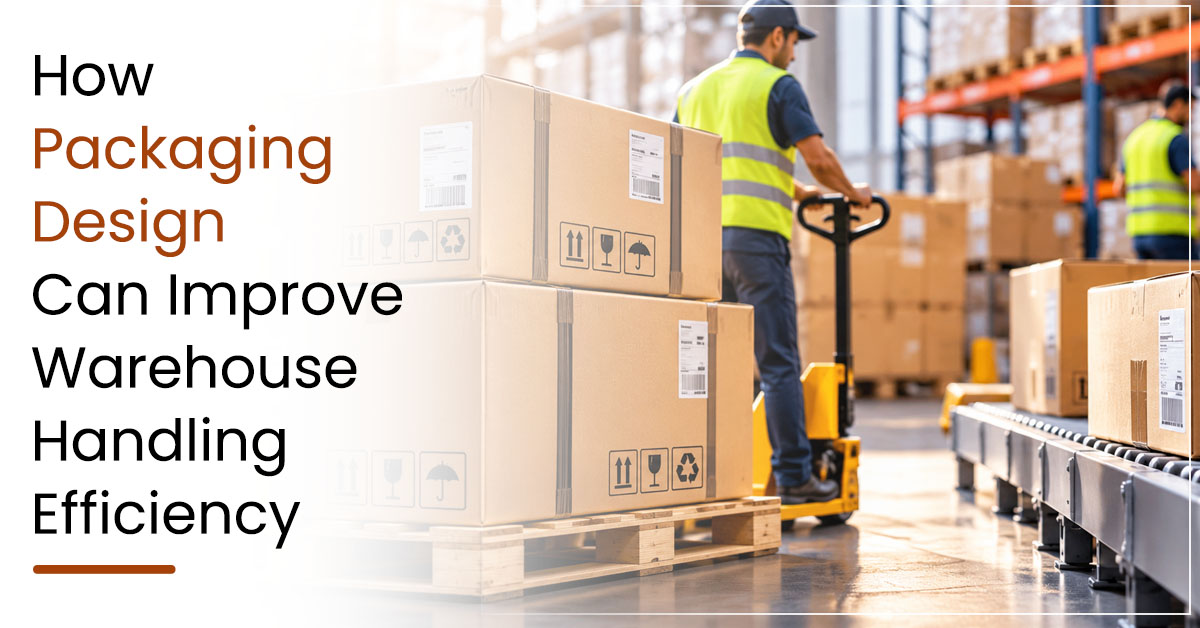
A warehouse supervisor watches a loader struggle with a stack of cartons that are all slightly different sizes. The pile leans, a bottom box crushes, and a pallet has to be rebuilt before the truck can leave. Nothing was wrong with the products. The packaging simply was not designed for the way goods move through a warehouse.
This article explains how packaging design affects receiving, storage, picking, stacking, loading and returns, and what to look for in box size, strength, labelling and materials to save time and reduce damage. If you are talking to packaging industries in Chennai, these points will help you ask for specifications that work on the floor and not just on paper.
Why Packaging Is a Warehouse Problem,
Not Just a Product Problem
Packaging is often chosen for looks or cost per piece. In a warehouse, it becomes a handling tool. Every carton is lifted, scanned, stacked, moved and loaded several times before it reaches a customer.
Poor design shows up as lost minutes. Boxes that do not stack evenly slow loading. Weak corners crush under weight. If labels are missing or hidden, scanning is delayed. Odd sizes waste shelf space. Each small delay repeats across thousands of cartons, and the cost adds up quickly.
Standard Sizes and Modular Measurements
A very simple improvement is to use a limited range of carton sizes which fit together neatly.
- Choose dimensions that divide evenly into pallet and shelf footprints
- Limit the number of sizes, so staff and systems can handle them consistently
- Design cartons to stack in interlocking patterns without overhang
- Avoid overhanging edges, which get damaged by forklifts and racking
- Match carton height to shelf clearance, so space is not wasted
Modular sizing improves pallet stability, makes space planning easier and speeds up both packing and loading. Before finalising sizes, measure the shelves, racks and pallets already in use. A carton that is a few millimetres too wide can waste an entire shelf slot, so it pays to design around the storage you already own.
Strength, Stackability and Protection
A carton has to survive weight from above, vibration in transit and rough handling.
Board grade, flute type and the number of plies decide how much stacking load a box can bear. Under-specified boxes crush at the bottom of a pallet, while over-specified ones waste money and material. Compression strength should be matched to how high goods are stacked and how long they stay in storage, since humidity and time reduce corrugated strength.
Inner protection matters as much. Dividers, inserts and cushioning keep products from moving, so the outer carton is not forced to do all the work. Corner protection and edge boards help pallets hold their shape under stretch wrap. Run a simple stack test before approving a design. Load a sample pallet to its real height, leave it for a few days and check the bottom layer for bulging or crushed corners. Real conditions reveal weaknesses that a specification sheet can miss.
Labels, Barcodes and Visual Cues
Information on the box speeds up almost every warehouse task.
- Place barcodes on a consistent panel, so scanners find them quickly
- Use clear product names, quantities and batch details in readable type
- Add handling marks such as this way up, fragile and stacking limits
- Colour-code cartons or labels by product family, destination or priority
- Keep labels away from seams and edges, where they tear or fold
- Print on both ends or two sides, so cartons can be read from any stacking position
Good labelling reduces picking errors and returns, and it makes training new staff easier. Involve the floor team when choosing label positions. Pickers and loaders know which panel they actually see first, and their feedback often prevents scanning delays that nobody noticed during design.
Easy Opening, Picking and Repacking
Design should consider the people handling the box, not only the machines. Hand holes, grip points, relieve strain and make lifting easier. Cartons with tear strips or easy-open features permit quick unpacking on the production line or in the store. Re-closable flaps and re-usable closures mean that the package is repackable for e-commerce and returns. Also, the weight limits for each carton matter. If boxes are too heavy, workers will slow down, which increases the chance of injury.
Material Choices: Corrugated, PP and Reusable Options
Different materials suit different flows.
- Corrugated cartons: Cost-effective, recyclable and easy to print, suited to most general goods
- PP sheet boxes: Lightweight, moisture-resistant and washable, good for repeated use and for goods sensitive to humidity
- Plastic crates and totes: Durable and stackable, suited to closed-loop movements between known locations
- Wooden and composite pallets: Provide a stable base, with choice depending on weight and export rules
In Chennai’s humid climate, moisture resistance deserves attention, since damp weakens ordinary corrugated board. Choosing the right material for the route and storage time can cut damage and replacement costs.
Designing for Space, Transport and Loading
Packaging affects how much fits into a rack, a container or a truck.
- Optimise carton size to the product, so there is no unnecessary air
- Check that cartons fit common truck and container dimensions with minimal gaps
- Plan pallet patterns that lock together and resist tipping
- Consider palletised and slip-sheet options for faster loading
- Think about weight distribution, with heavier cartons low and lighter ones high
Better cube utilisation reduces the number of trips and lowers transport costs, and tidy loads reduce transit damage. Track damage and loading time before and after any packaging change. A few weeks of simple records show whether the new design is saving time and money, and they give you evidence for rolling it out to other product lines.
Working With a Packaging Partner
Total Packaging Solutions supplies packaging for industrial and commercial customers in Chennai, covering corrugated boxes, PP products and protective materials. Its team helps buyers match carton design, strength and material to the product, the storage conditions and the route. Share real details when you brief a supplier: product weight and dimensions, stacking height, storage duration, handling method and any past damage issues. A sample tested on your own floor reveals more than a catalogue photo ever will.
Turning Better Boxes Into Faster Operations
Warehouse efficiency is often treated as a layout or software issue, yet the box itself is one of the biggest influences on speed and damage. Standard sizes, suitable strength, clear labels, easy handling and the right material work together to reduce rework and keep goods moving. Start with one problem area, such as crushed bottom cartons or slow loading, and test a better design there. When you are ready to explore lightweight, moisture-resistant options, look at PP sheet manufacturers and ask for samples that can be trialled in your warehouse.