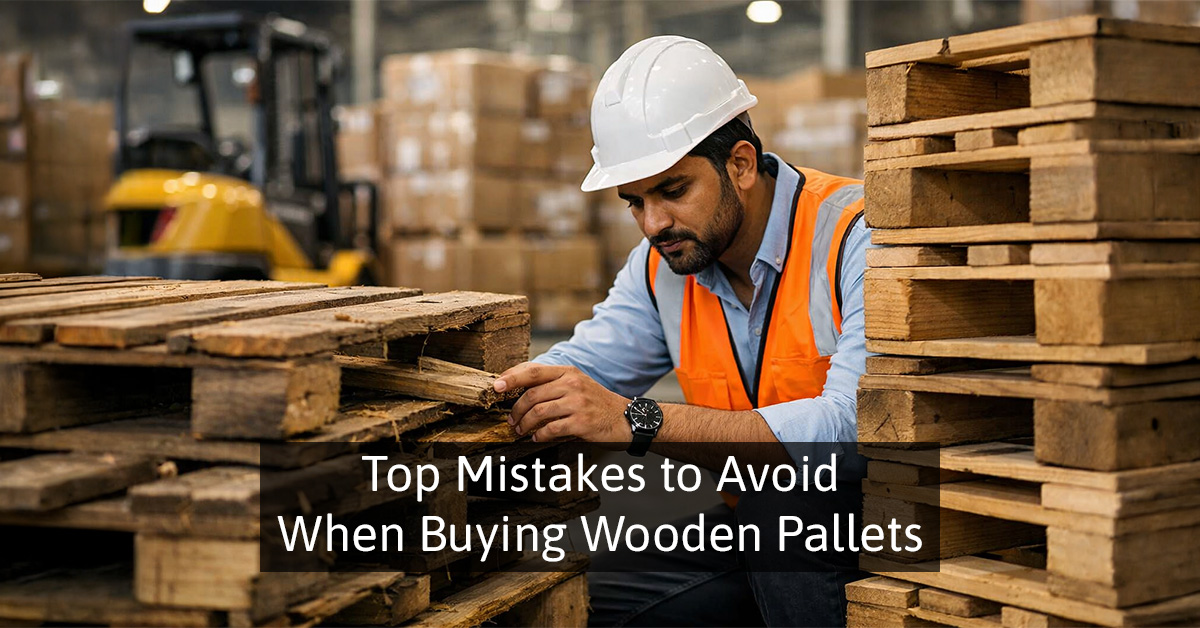
Procurement for industrial logistics often treats pallets as a commodity, a secondary thought compared to the machinery or goods they carry. This is a costly oversight. Selecting the wrong load carrier leads to damaged goods, rejected export shipments, and workplace safety hazards that could have been avoided with better vetting of Wooden Pallet Manufacturers In Chennai. Most warehouse managers realise too late that a pallet is an engineered component, not just a bunch of wood nailed together. If the base fails, the entire stack fails. It is that simple. When you ignore the technical specifications of a pallet, you are essentially gambling with your inventory during transit.
Why is underestimating load capacity a critical
failure?
The most common failure in a warehouse isn’t the shelf collapsing. It is the pallet snapping under a static load it wasn’t designed for. A pallet might look sturdy, but its performance changes when it is sitting on the floor versus being racked. You need to know the difference between static, dynamic, and racking capacity. Static load refers to the pallet at rest on a level surface. Dynamic load covers the weight while the pallet is in motion on a forklift. Racking capacity is the most demanding, as the pallet must support the weight while being held only by two edges.
Many buyers assume a 1,000kg load is a 1,000kg load regardless of the situation. This is wrong. If your forklift operators move at high speeds over uneven surfaces, the dynamic load requirement is significantly higher than the static weight of the product. Vibration and sudden stops increase the stress on the wood grain. Failing to specify these requirements leads to warped boards or catastrophic failure during loading. Always over-specify the weight capacity by at least 20 percent to account for these operational variables.
How does the wood species affect your durability?
Selecting among the various Types of wooden pallets is a trade-off between upfront cost and site safety. Pine is the default choice because it is cheap. However, if you are stacking heavy automotive components or engine blocks, pine stringers will splinter under localised pressure. Hardwoods like rubberwood or acacia offer better density. They cost more initially. You have to weigh the Usage of wooden pallet against the reality of your repair budget.
- Softwoods: These work for one-way export trips where the pallet never comes back.
- Hardwoods: Use these for internal loops where the unit gets slammed by forklifts daily.
- Plywood: It is fine for light electronics but collapses in high-moisture docks.
Humid warehouses turn poorly dried hardwoods into a breeding ground for mould. Conversely, kiln-dried softwoods often become brittle in high-heat environments, leading to catastrophic deck board failure under impact. Matching the right Types of wooden pallets to your facility require looking at your specific floor temperature and the aggression of your forklift team. Generic choices usually end in broken timber.
Why is ISPM-15 compliance non-negotiable for
exports?
Exporting goods without the IPPC stamp is a fast track to having your container stuck at customs. Heat treatment (HT) is mandatory to kill pests. Some buyers try to save money by opting for chemically treated wood, but modern standards favour heat treatment for safety and environmental reasons. We have seen entire shipments sent back because the pallet lacked the proper markings. This results in massive demurrage charges and lost client trust.
The wood must be heated until its core temperature reaches at least 56 degrees Celsius for 30 minutes. This process does more than just kill bugs; it reduces the moisture content of the wood. High moisture is the enemy of corrugated boxes. If you place a cardboard carton on a “green” pallet, the moisture will seep into the cardboard, weakening it and causing the stack to lean. Always request the HT certificate from your supplier before the pallets reach your loading dock.
Why should you vet your suppliers beyond the
price tag?
Searching for the Best wooden pallet manufacturers usually starts with a Google search, but it should end with a factory visit. A cheap pallet usually means the wood was green or the fasteners were under-specced. High moisture leads to mould, which ruins electronic packaging and textiles. Reliable Best wooden pallet manufacturers will provide certification for their wood sourcing and treatment processes.
- Fastener Quality: Using the wrong nail size or a lack of screw-shank nails causes boards to pop loose.
- Lead Times: A manufacturer without its own sawmill or large seasoning yard will struggle to meet JIT (Just-in-Time) requirements.
- Quality Control: Check if the manufacturer inspects for knots and cracks in the stringers, which are the main load-bearing components.
- Customisation: Can they build a pallet to your specific SKU dimensions, or are they only pushing standard sizes?
Does the standard 1200×1000 size always work?
Efficiency in a container depends on the footprint. If you choose a standard size but your goods overhang the edges, the pallet provides zero protection. The pallet should act as a bumper. Conversely, if the pallet is too large, you lose valuable floor space in the truck. You are paying to ship air.
Two-way entry pallets are often stronger because they use solid stringers, but they limit how a forklift can approach the load. Four-way entry pallets use blocks, allowing for much more flexibility in tight warehouse aisles. The Usage of wooden pallet in your specific facility should dictate this choice. If your warehouse has narrow aisles, a two-way pallet will frustrate your drivers and slow down your throughput. Measure your racking, your truck widths, and your product dimensions before placing an order.
How do moisture content and seasoning impact
performance?
Most industrial buyers ignore the moisture content (MC) of the timber. Freshly cut wood can have a moisture content of over 50 percent. As it dries, it shrinks and warps. If a pallet is assembled with wet wood and then stored in a hot warehouse, the nails will loosen as the wood fibres contract. This is known as “nail withdrawal”, and it turns a sturdy pallet into a wobbly safety hazard within weeks.
Ideally, industrial pallets should have a moisture content between 15 and 19 percent. This level provides the best balance between strength and weight. It also prevents the growth of fungi that can contaminate food-grade or pharmaceutical products. If your supplier cannot tell you the MC percentage of their current stock, they are likely skipping the seasoning phase to save time. This is a red flag that indicates the pallets will not hold their shape under long-term storage.
How does pallet quality impact your entire supply
chain?
The logistics industry is built on small margins. A single pallet failure can wipe out the profit from an entire shipment. When a pallet collapses in a high-reach rack, the damage isn’t limited to the goods on that pallet. It often knocks down adjacent stock and can damage the racking system itself. The cost of the cargo is usually 100 times the cost of the pallet, yet companies still try to save a few rupees on the base.
Total Packaging Solutions emphasises that a pallet is the foundation of your shipping strategy. It is the interface between your product and the global transport network. When you choose a partner within the Packaging Industries in Chennai, you are choosing the security of your inventory. Prioritising structural integrity, moisture control, and compliance over the lowest possible quote is the only way to ensure a seamless supply chain. A good pallet is invisible because it does its job without incident. A bad pallet is the only thing you will talk about when the shipment arrives damaged.