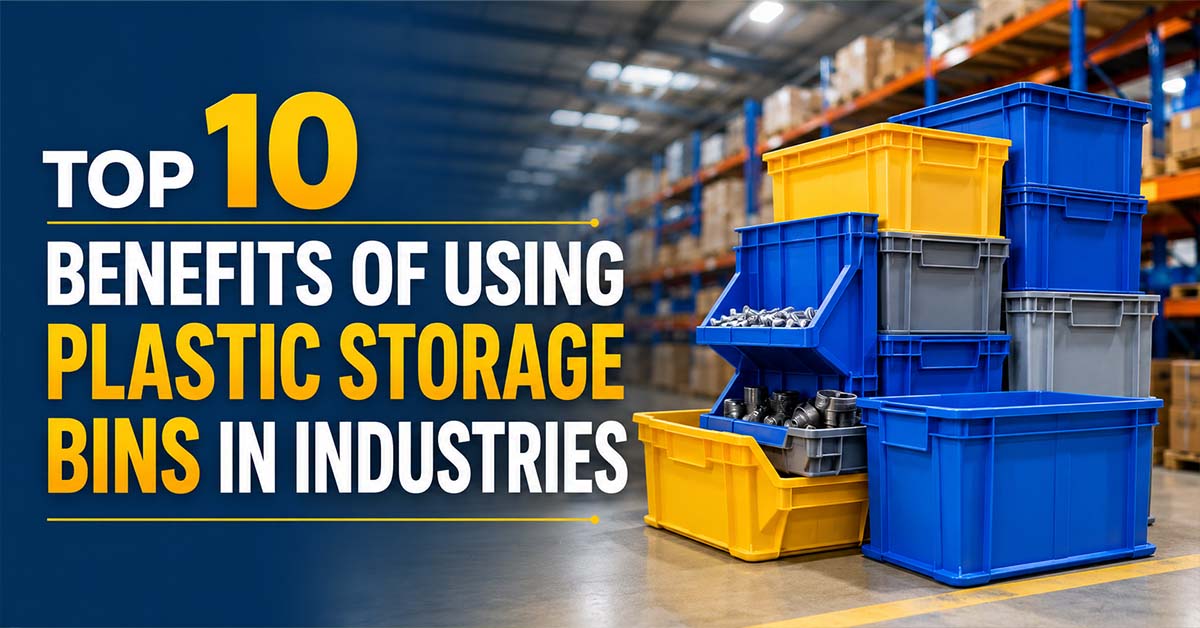
Walk through any well-run warehouse, and you’ll see the same thing everywhere: neat rows of stackable bins quietly doing the unglamorous work of keeping everything where it belongs. That’s not an accident. Industrial plastic storage bins have become the default choice for manufacturers, logistics firms, and warehouses across India because they solve problems that cardboard, metal, and wood never could. If you’re weighing your options right now, maybe comparing quotes from Plastic Bin Manufacturers In Chennai, it’s worth knowing exactly what you’re paying for.
1. Built to Outlast Almost Anything
Industrial environments are hard on equipment. Bins get dropped, dragged across concrete, stacked under heavy loads, and exposed to oil, dust, and moisture day after day. Storage bins for factories need to survive all of that without cracking or degrading, and high-density plastic does exactly that. Unlike cardboard, which weakens with a single spill, or wood, which splinters and rots, plastic bins shrug off rough handling for years. Many are also UV-stabilised and impact-resistant, which matters more than people expect if bins spend any time in outdoor storage yards or loading bays.
2. Lighter Handling, Fewer Injuries
Metal containers might feel more “industrial,” but they’re heavy, and that weight adds up quickly when workers lift and move bins dozens of times a shift. Plastic bins cut that physical strain considerably. Lighter loads mean less fatigue, fewer strain injuries, and faster movement across the floor, which matters a lot when a facility is running on tight turnaround times.
3. Reusable Plastic Storage Bins Cut
Long-Term Costs
Here’s where the savings actually show up on a balance sheet. A cardboard box gets used once, maybe twice if you’re lucky, then it’s landfill. Reusable plastic storage bins don’t work that way. They’re built to survive hundreds, sometimes thousands, of load-unload cycles without needing to be replaced, and when you compare that to constantly buying fresh corrugated boxes, the difference is clear:
- You stop paying for packaging every few weeks
- Disposal and waste management costs drop off almost entirely
- Overall packaging spend shrinks across the whole supply chain
- The longer a bin stays in rotation, the better the return gets
Most facilities that make the switch notice their packaging budget shrink within the first year.
4. Stackability That Actually Saves Floor Space
Floor space in a factory or warehouse costs money, whether it’s used well or not. Most industrial plastic storage bins are designed with interlocking or nestable stacking features, allowing facilities to build upward rather than sprawl outward. That single design choice can free up aisle space, improve forklift access, and allow a facility to store considerably more inventory within the same physical footprint.
5. Better Protection for What’s Inside
Products sitting in storage or moving through a supply chain face real risks. Dust gets in. Moisture gets in. So do pests, and so does the occasional drop off a trolley. A plastic bin with a secure lid effectively seals out moisture, pests, and the occasional drop from a trolley, something an open crate or a loosely taped box cannot achieve. If you’re storing components, electronics, or food-grade materials, that’s not a nice-to-have; it’s the baseline. And it pays for itself quietly: fewer rejected batches, fewer returns, less rework chasing down stock that got damaged or contaminated somewhere along the way.
6. Easy to Clean, Easy to Maintain
Spills happen. Dust piles up. And in industries where hygiene actually matters, food processing, pharmaceuticals, and electronics assembly, being able to thoroughly clean a container isn’t optional; it’s the baseline. Plastic bins wipe down in seconds, resist bacterial This growth is far better than porous wood ever could be and can withstand repeated washing without falling apart. Storage bins for factories operating under strict quality or hygiene standards rely on this feature constantly, often without anyone even thinking about it.
7. Chemical and Moisture Resistance
Factories aren’t clean rooms. Oils, solvents, cleaning agents, and humidity that swing with the season, containers deal with all of it, whether they’re built for it or not. Most industrial-grade plastic resists corrosion, rust, and chemical degradation in ways that metal and wood simply cannot. A metal container left in damp conditions can start rusting within months. A properly made plastic bin just keeps doing its job, holding its shape for years.
8. Customisation That Fits Actual Workflows
No two production lines look exactly alike, so a one-size-fits-all container rarely does the job well. That’s why manufacturers today don’t just sell one bin; they sell a whole catalogue: small parts trays alongside large pallet-mounted containers, colour options for quick visual sorting on a busy floor, load capacities matched to whatever’s actually being carried, and configurations like divided compartments, hinged lids, or vented designs depending on what’s going inside. Match the bin to the workflow, not the other way around, and everything downstream just runs smoother.
9. A Genuinely Sustainable Choice
Sustainability isn’t just a marketing checkbox anymore, it’s increasingly a procurement requirement. Reusable plastic storage bins directly cut single-use packaging waste at the source, and because these containers go through hundreds of load cycles before retirement, their environmental footprint per use drops dramatically compared to disposable alternatives. Many manufacturers also produce these bins from recyclable or partially recycled plastic, giving facilities a genuine, verifiable sustainability story rather than an empty claim. For companies working with established packaging suppliers on broader sustainability goals, switching to reusable containers is often one of the simplest wins available, and one that shows up clearly in annual waste and emissions reporting.
10. Standardisation Across the Supply Chain
When every facility in a supply chain uses bins of consistent size and design, everything downstream gets easier. Pallet loading becomes more predictable, warehouse racking gets used more efficiently, and transport costs often drop because trucks and containers are packed with less wasted space. Industrial plastic storage bins, once standardised across a company’s operations, also tend to simplify inventory tracking, since staff already know exactly what to expect from each container. Onboarding new warehouse staff also gets faster, since there’s one system to learn instead of a patchwork of mismatched containers accumulated over the years.
Choosing the Right Bins for Your Operation
Not every bin suits every application, so it’s worth thinking through a few practical questions before placing a bulk order:
- What load weight will the bins typically carry?
- Do they need to stack, nest, or both?
- Is chemical or temperature resistance a priority for your industry?
- Will the bins move through multiple facilities, or stay within one site?
- Do you need custom sizing or standard off-the-shelf options?
Why This Matters More Than It Seems
It’s easy to treat storage containers as a minor operational detail, something to sort out after making the “real” decisions about production and logistics. In practice, the right bins influence worker safety, product protection, floor space efficiency, and long-term costs all at once. A facility running on the wrong containers ends up paying for that mistake repeatedly, through damaged goods, wasted space, and higher packaging spend, long after the initial purchase decision is forgotten.
Whether you’re setting up a new facility or upgrading an existing one, the shift toward durable, reusable containers tends to pay for itself faster than most teams expect. Storage bins for factories aren’t a small line item either; they’re part of a much bigger picture that includes protective packaging, pallets, and shipping materials working together across the supply chain. If you’re evaluating that bigger picture, established Packaging Companies In Chennai can generally advise on material choice, bulk pricing, and customisation, not just on bins in isolation. Good storage infrastructure rarely attracts attention when it works well, but everyone notices when it doesn’t.