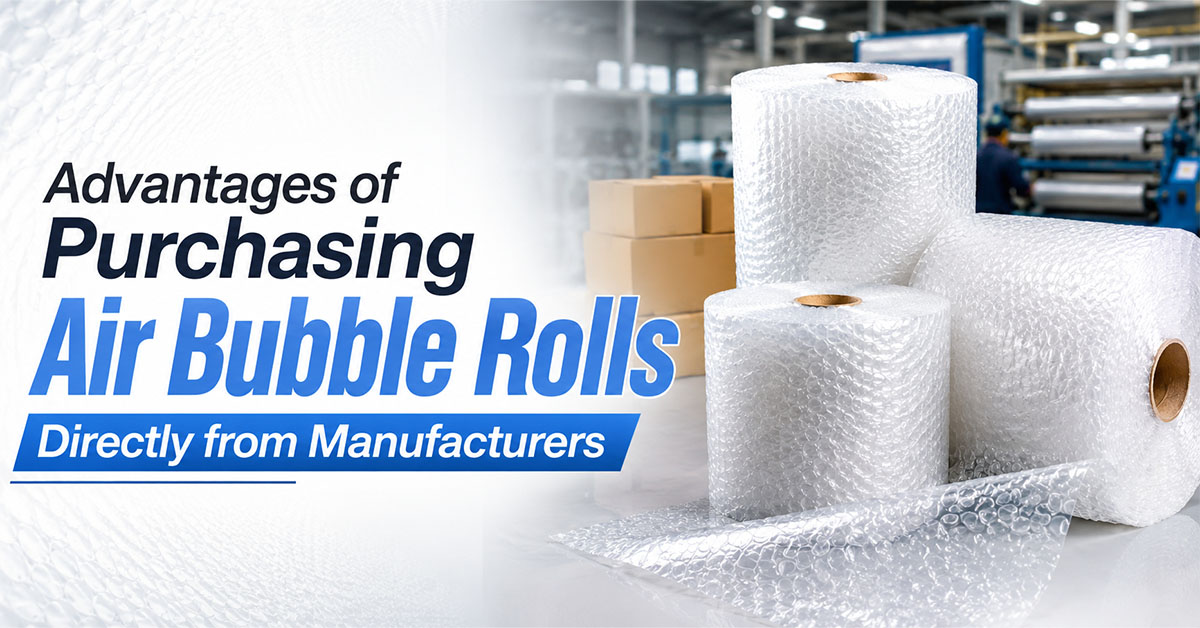
Most procurement teams buy air bubble rolls the same way they buy printer paper: through whichever supplier picked up the phone first. That works fine until a shipment arrives late, a roll tears under load, or the price quietly creeps up for no clear reason. Going straight to established air bubble roll manufacturers rather than a reseller changes the equation. You get a say in the build of the roll, a clearer price, and a supply line that doesn’t depend on someone else’s stock levels. For any business that regularly buys industrial packaging materials, this decision isn’t a minor procurement tweak. It’s the difference between reacting to packaging problems and actually controlling them.
What Actually Changes When You Skip the
Middleman
A typical distributor doesn’t make the bubble roll on their shelf. They buy it in bulk from a manufacturer, mark it up, and sell it on. That markup pays for their warehouse, their sales team, and their margin, none of which adds anything to the roll itself. Buy from the manufacturer directly, and that layer disappears. The same 20mm bubble film, the same VCI coating, and the same antistatic grade, just without the extra hands it passed through to reach you.
There’s also a practical shift in how problems get solved. A distributor can tell you what’s in stock. A manufacturer can tell you why the bubble diameter on your last batch was slightly different, walk you through what caused it, and adjust the next run accordingly. Most bubble wrap suppliers working purely as middlemen can’t offer that kind of explanation, since they’re relaying someone else’s process rather than their own. That kind of direct line matters more than most buyers realize until they’ve actually needed it.
Where the Cost Advantage Actually Shows Up
Price is usually the first reason buyers consider going direct, and it holds up under scrutiny:
- No reseller markup sits between the factory price and what you pay
- Better rates on bulk orders, since manufacturers can plan production runs around your volume instead of guessing at demand
- Lower freight costs when you’re sourcing from a regional plant instead of a distributor importing from elsewhere
- Fewer hidden charges for things like custom sizing or rush orders, since those requests go straight to the people who can actually fulfill them
None of this means going direct is automatically cheaper for every order size. A business ordering a few rolls a month might not notice much difference. A business running through pallets of bubble film every week will feel it immediately, especially once freight and bulk pricing get factored in.
Quality Control You Can Actually Verify
This is where buying direct earns its reputation. A reseller can show you a sample and a spec sheet, but they can’t show you the extrusion line, the bubble diameter tolerance, or how the film performs under repeated handling, because they never touch any of it themselves. A manufacturer can. Walking through a production facility, watching the film come off the line, and asking direct questions about thickness control and bubble retention tell you far more about whether you’re getting durable packaging products than any catalog ever will.
Manufacturers also tend to test their own output more rigorously, since their name is attached to it. Burst resistance, puncture strength, and how the film holds up under heat or humidity are things a serious producer checks routinely, not something a buyer has to ask about.
Customization That Distributors Can’t Offer
Off-the-shelf bubble wrap works well for general use, but many industrial applications require something more specific. Going direct opens up options that simply aren’t available through a standard reseller:
- Bubble size selection. Large 20mm bubbles for heavier machinery and equipment, smaller bubbles for lighter cushioning and void fill.
- Specialty coatings. Anti-static film for electronics, VCI film for metal parts and auto components prone to corrosion.
- Laminated variants. Paper-laminated rolls for padded envelopes, foam-laminated rolls for furniture and glass, woven sack lamination for heavy items like steel coils.
- Custom printing. Branded film with your company’s name or logo, useful for businesses that want their packaging to do double duty as marketing.
- Width and perforation specs. Rolls are cut and perforated to match your exact handling process, rather than forcing your process to match a standard roll size.
Most bubble wrap suppliers that work purely as resellers simply don’t carry this range because they’re limited to whatever their manufacturer happens to stock.
Supply Reliability That Doesn’t Depend on Someone
Else’s Inventory
A distributor’s stock is only as good as their own supplier relationships. If the manufacturer they buy from runs short, that shortage affects you directly, often with no warning and no clear explanation. Buying direct removes that extra link. You’re dealing with the actual production schedule, not a secondhand estimate of it, which matters considerably when a packaging shortage can stall an entire shipping line.
This matters most for businesses with seasonal spikes or recurring high-volume needs. A manufacturer with visibility into your order patterns can plan capacity accordingly. A reseller several steps removed from production has far less ability to do that and even less reason to prioritize your order over anyone else’s when supply gets tight.
What to Check Before You Switch to a
Direct Supplier
Going direct isn’t automatically better if the manufacturer can’t actually deliver. A few things worth confirming before signing on:
- Can they show you their actual production facility, not just a sample catalog?
- Do they manufacture the specific grade you need, including antistatic, VCI, or laminated variants, or only standard rolls?
- What’s their minimum order quantity, and does it match how your business actually buys?
- Can they handle both bulk supply and recurring smaller orders without one disrupting the other?
- Do they have a track record with industries similar to yours, whether that’s automotive, electronics, or food packaging?
A manufacturer confident in their own setup will usually be glad to answer these directly rather than deflect them.
Building a Relationship, Not Just Placing an Order
The businesses that get the most from a direct manufacturer relationship tend to treat it as ongoing, not transactional. They share rough demand forecasts, flag changes in their packaging needs early, and give feedback on how a roll performed in the field instead of just reordering the same SKU on autopilot. A manufacturer who values that relationship returns the favor: holding capacity, flagging shortages early, and prioritizing a long-term buyer over someone who showed up last week.
This kind of back-and-forth is hard to build with a reseller, since they have limited ability to act on feedback about the actual film. It’s far more workable with a producer who controls the extrusion line and can adjust a formulation or a coating based on what you’re reporting. Over a few years, that difference compounds. Businesses sourcing industrial packaging materials this way end up with a supplier who anticipates their needs rather than one who simply fills an order form, and with durable packaging products that keep improving rather than staying static year after year.
Making the Switch Worth It
Switching from a reseller to a direct manufacturer relationship isn’t just about shaving a few rupees off each roll. It’s about getting a packaging partner who actually understands material performance, can adjust specifications when your needs change, and won’t leave you guessing when supply gets tight. For businesses that depend on industrial packaging materials in their daily operations, that kind of reliability quickly translates into cost savings and fewer shipment disruptions. Bubble wrap suppliers who simply move inventory from one warehouse to another can’t offer the same depth of support, and over time that gap becomes hard to ignore. If you’re sourcing packaging in or around Chennai and want durable packaging products backed by an actual production facility, it’s worth looking at how established names among the packaging industries in Chennai have built their reputation on exactly this kind of direct, accountable relationship with the businesses they supply.